Three Sisters roadblock escape
Heart of the HunterThree Sisters roadblock escape turns a high-speed pursuit into a close-range test of Thobela Mpayipheli’s control. Hunted by air and blocked on the ground, he loses command of his motorcycle in the mud and collides with the soldiers. He escapes with one of their firearms, but then uses a military radio not to taunt his pursuers, but to identify himself, acknowledge an injury, and ask for the pursuit to stop. The episode’s decisive tension lies in that contrast: Thobela has the means to inflict further violence, yet makes restraint part of his escape.
Background and the road north
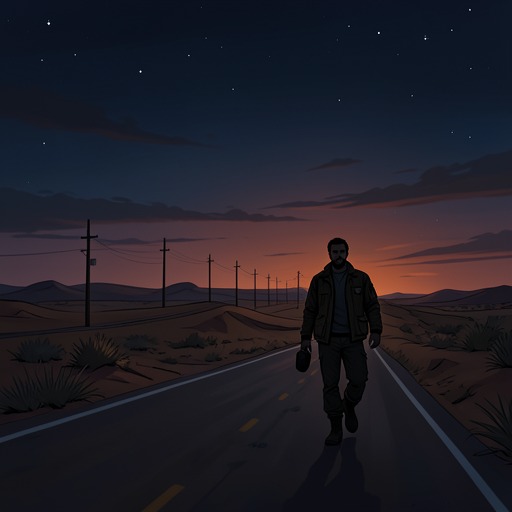
The flight is already dangerous before the cordon comes into view. When Thobela first takes the BMW R 1150 GS, its power and bulk nearly throw him: turning onto Oswald Pirow, he opens the throttle too sharply, struggles to recover the bike, and nearly tips again when its anti-lock brakes engage. The machine is far more powerful than his Honda Benly; on the freeway, he is still learning its wide handlebars, heavy tank, and balance while trying not to impede the traffic around him. His escape therefore depends on a vehicle that gives him speed but initially demands more skill than he has had time to acquire.
Beyond Touws River, he takes stock of the distance and the fuel gauge. He expects to refuel at Laingsburg, then face roughly 200 kilometres to Beaufort West across the Great Karoo; from there, Bloemfontein lies another 500 or 550 kilometres away. He considers whether he can reach it before sunrise, then anticipates needing to rest in a Black township during daylight. These calculations make the chase more than a contest of speed: fuel, fatigue, darkness, and the need to avoid detection all shape the route.
Air pursuit and the storm
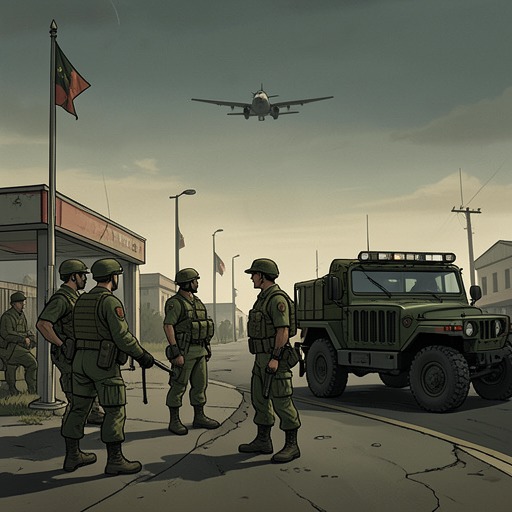
The immediate pursuit intensifies when a helicopter flies low over Thobela, less than a hundred metres above him, before falling back beside a second helicopter. Their engines vibrate through him as he holds the accelerator open, aware that the aircraft are faster and wondering why they are not closing in. He is already travelling at more than 200 kilometres per hour when a dense bank of weather approaches. The oncoming traffic’s lights and wipers suggest the storm’s depth; then rain strikes hard enough to reduce visibility and make the visor difficult to see through.
Thobela slows behind a truck, waits for an opportunity to pass, and continues through sheets of rain and spray. The weather that impairs his escape also disrupts the aerial pursuit. On the ground, Quinn receives a report that visibility is too poor and turbulence too heavy for the Rooivalk crews to continue safely. Janina Mentz orders them to stay with him, but the pilots report that visibility is zero and that they have lost visual contact even with one another. The command to maintain pursuit cannot overcome the conditions: the storm has made the surveillance network blind.
The collision at the cordon
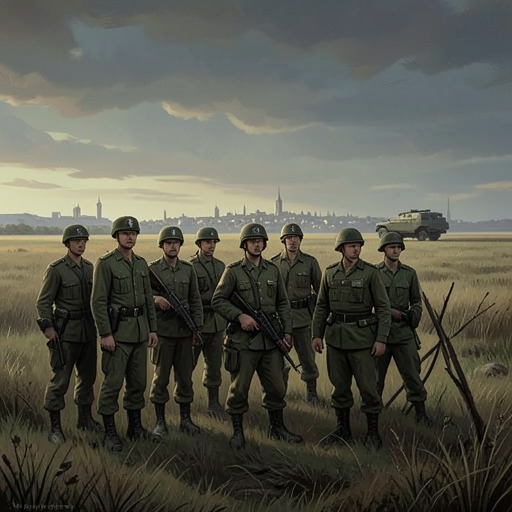
The rain also muffles Thobela’s approach to the soldiers. They do not hear the motorcycle coming. Weariness after a sleepless stretch and the steady noise of rain dull their senses; their conversation further reduces the chance of warning. The ground at the bend is treacherous: the straight beforehand offers a good surface for acceleration, but the turn is unexpectedly sharp, and thick mud lies directly in front of the soldiers. Following the road’s established track, Thobela reaches the critical point and the front wheel loses its grip.
The soldiers see the headlight and hear the engine only when the machine is upon them. Little Joe Moroka and Weyers react together, their training bringing their hands to their weapons as the sliding motorcycle strikes Weyers. Thobela falls away from the bike; Moroka also goes down, and his R6 fires into the air as he falls. In the confusion, Thobela gets up quickly, drives into Moroka, and knocks him down again. Moroka’s later reconstruction emphasizes how little time there was to understand what had happened: the rider seemed to fall, then was suddenly on him.
Thobela takes Moroka’s R6 after a struggle in the mud. With the gun at Moroka’s eye, he pushes up his helmet visor and tells him, “Look what you’re making me do.” The encounter is not presented as a clean, planned assault: the loss of control that caused the collision was accidental, and the violence that follows occurs in the seconds required to get free. Weyers is injured, and Moroka cannot turn toward him when he hears him calling. The pursuit has produced a real casualty, even though Thobela has not set out to cause one.
Identification and immediate consequences
Thobela then reaches a military frequency and gives his name, declaring that he is the man the authorities are seeking. For Captain Tiger Mazibuko, the admission brings a sudden, charged recognition: the fugitive has not merely escaped a team but proved himself a worthy opponent. Mazibuko answers with a death threat and urgently mobilizes his people, ordering the helicopter back into the air and collecting weapons and ammunition. The exchange makes the pursuit personal, sharpening the conflict between a fugitive trying to escape and a commander determined to catch him.
Thobela’s own message is different in tone. He tells Captain Tiger Mazibuko that nobody needs to die, promises to do what he must if left alone, and asks for medical help for the injured men west of the N1, near the Sneeukraal turn-off. He specifically says that the serious injury was an accident and expresses regret. His account does not erase the danger of the assault or his taking of the firearm; it does, however, establish that he distinguishes escape from killing and is willing to make that distinction explicit to his pursuer.
The storm and the collision leave the cordon behind, but the journey remains precarious. Later, Koos Kok conceals Thobela in the back of a battered Chevrolet El Camino, lying on an old mattress beside the BMW R 1150 GS under a paint-flecked canvas tarp. Thobela reflects with satisfaction on suppressing an almost irresistible impulse when a door opened, and imagines telling Miriam Nzululwazi that he is safe and giving Pakamile stories of the journey. The hiding place is temporary, like the escape itself: in a later stretch, lost hours become urgent because he still faces national borders, lacks papers for the motorcycle, and must find a way across the Zambezi River. The cordon is broken, not the larger trap of distance, pursuit, and time.